Civil engineering continues to be one of the most stable and rewarding career paths, especially as global infrastructure development accelerates. In 2026, the demand for skilled civil engineers is higher than ever, driven by rapid urbanization, smart city projects, transportation expansion, and sustainable construction initiatives. From entry-level roles to specialized positions, civil engineering offers diverse opportunities for professionals at every stage of their careers.
Growing Demand for Civil Engineers
The construction and infrastructure sectors are evolving quickly, creating a surge in demand for civil engineers. Governments and private organizations are investing heavily in roads, bridges, railways, housing, and renewable energy projects. This has opened up numerous job opportunities for engineers with the right skills and experience.
In addition, the push toward sustainability and green construction is reshaping the industry. Engineers who understand eco-friendly materials, energy-efficient designs, and environmental regulations are especially valuable in today’s market.
1. Construction Project Engineer
One of the most in-demand roles in 2026 is the construction project engineer. These professionals are responsible for planning, coordinating, and overseeing construction projects from start to finish. They ensure that projects are completed on time, within budget, and according to specifications.
This role requires strong technical knowledge, leadership skills, and the ability to manage teams effectively. It is ideal for engineers who enjoy working on-site and handling real-world challenges.
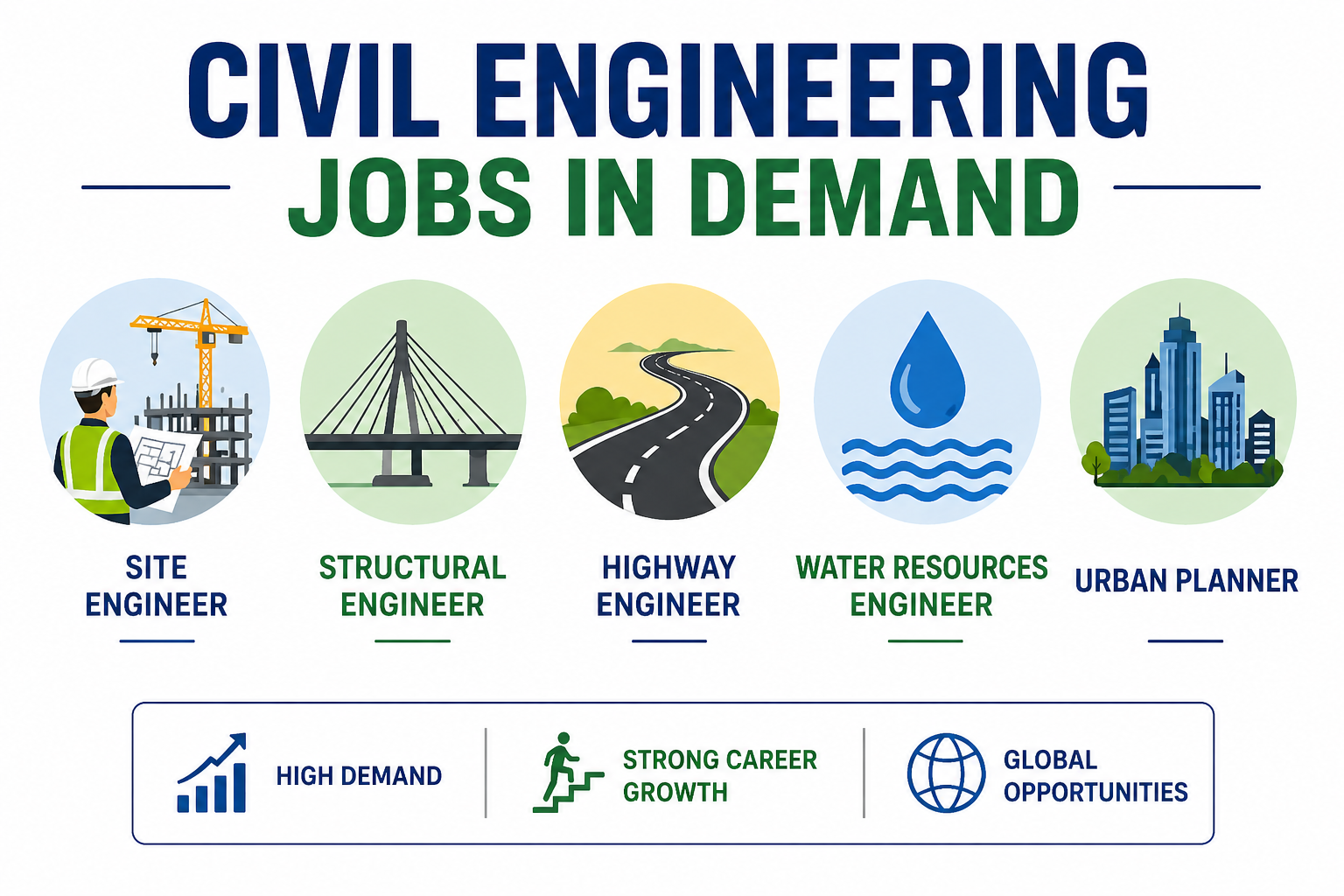
2. Structural Engineer
Structural engineers focus on designing and analyzing buildings, bridges, and other structures to ensure they are safe and durable. With increasing construction complexity, this role has become highly specialized and essential.
Professionals in this field must have a deep understanding of materials, load calculations, and safety standards. Structural engineering offers excellent career growth and high earning potential.
3. Site Engineer
Site engineers play a crucial role in day-to-day construction activities. They supervise construction work, manage labor, and ensure that projects follow design specifications and safety regulations.
This role is often considered an entry point for fresh graduates, providing hands-on experience and exposure to real construction environments. It is a great stepping stone for advancing into senior roles.
4. Transportation Engineer
With the expansion of highways, rail networks, and urban transit systems, transportation engineers are in high demand. They design and develop transportation systems that improve connectivity and reduce traffic congestion.
This role requires expertise in traffic analysis, road design, and urban planning. It also offers opportunities to work on large-scale public infrastructure projects.
5. Environmental Engineer
As sustainability becomes a priority, environmental engineers are gaining importance in the civil engineering field. They focus on minimizing the environmental impact of construction projects by developing eco-friendly solutions.
From waste management systems to water treatment facilities, environmental engineers contribute to building a greener future. This role is perfect for those passionate about sustainability and environmental protection.
6. Geotechnical Engineer
Geotechnical engineers analyze soil, rock, and ground conditions to determine the suitability of construction sites. Their work is critical for ensuring the stability and safety of structures.
This role involves site investigations, laboratory testing, and foundation design. It is a specialized field with strong demand in large infrastructure and construction projects.
7. Urban Planner
Urban planners work on designing and organizing cities to make them more efficient and livable. They collaborate with engineers, architects, and government authorities to plan infrastructure, zoning, and land use.
With the rise of smart cities, urban planning has become a highly sought-after career option. It offers a mix of technical and strategic responsibilities.
8. Quantity Surveyor
Quantity surveyors are responsible for managing project costs and budgets. They estimate expenses, prepare contracts, and ensure that projects remain financially viable.
This role is essential for controlling costs in construction projects and offers strong career growth in both private and public sectors.
9. Water Resources Engineer
Water resources engineers focus on managing water supply, drainage systems, and flood control projects. With increasing concerns about water scarcity and climate change, this role is becoming more critical.
Professionals in this field work on dams, irrigation systems, and water treatment plants, contributing to sustainable resource management.
10. Civil Engineering Consultant
Civil engineering consultants provide expert advice on construction projects, design solutions, and technical challenges. They often work with multiple clients and projects, offering diverse exposure.
This role is ideal for experienced engineers who want flexibility and the opportunity to work on various types of projects.
Skills Required for Success
To succeed in civil engineering jobs in 2026, professionals need a combination of technical and soft skills. Key skills include:
Strong knowledge of engineering principles and software tools
Project management and problem-solving abilities
Communication and teamwork skills
Adaptability to new technologies and industry trends
Understanding of sustainability and environmental practices
Engineers who continuously upgrade their skills and stay updated with industry developments will have a competitive edge.
Career Growth Opportunities
Civil engineering offers excellent career growth opportunities. Professionals can start as site engineers or junior engineers and gradually move into senior roles such as project managers, consultants, or even company directors.
Specialization in areas like structural design, environmental engineering, or transportation can further enhance career prospects. Additionally, certifications and advanced degrees can open doors to higher-paying positions and leadership roles.
Future Trends in Civil Engineering
The future of civil engineering is shaped by innovation and technology. Trends such as Building Information Modeling (BIM), automation, and smart infrastructure are transforming how projects are designed and executed.
Sustainable construction practices, renewable energy integration, and digital tools are also becoming standard in the industry. Engineers who embrace these trends will be better positioned for success in the coming years.
Conclusion
Civil engineering jobs in 2026 offer a wide range of opportunities for professionals with diverse interests and skills. From construction project management to environmental sustainability, the field continues to evolve and expand.
With the right skills, experience, and mindset, civil engineers can build rewarding careers while contributing to the development of modern infrastructure. As demand continues to grow, now is the perfect time to explore and pursue a career in civil engineering—especially if you are ready to find job civil engineer opportunities that match your goals.







Write a comment ...