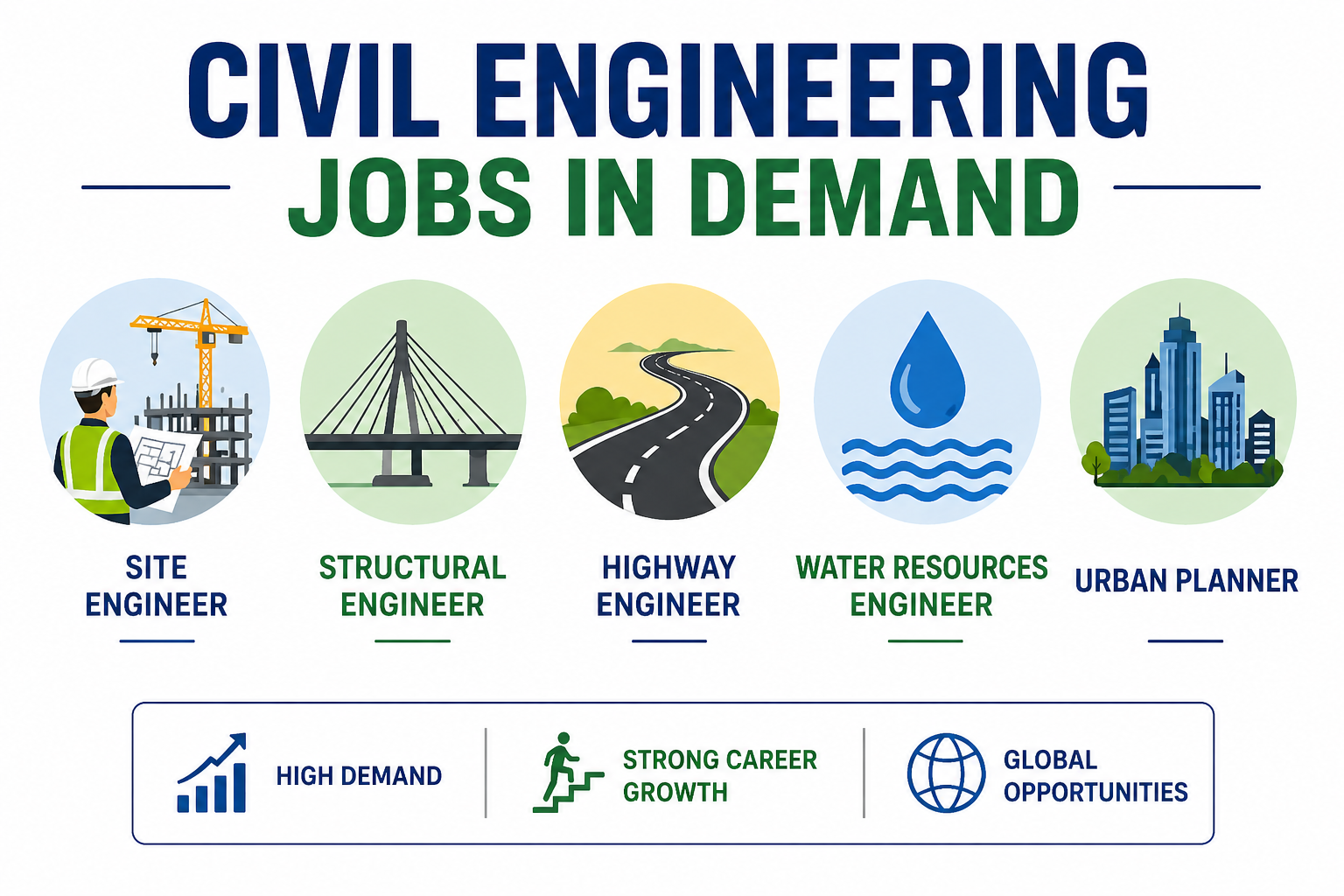
The civil engineering industry is undergoing a massive transformation driven by technology, sustainability, and global infrastructure needs. As cities expand and governments invest heavily in modernization, the opportunities for engineers are evolving faster than ever. In today’s competitive landscape, civil engineering jobs in demand are no longer limited to traditional construction roles but now include tech-driven and specialized positions.
This shift is redefining what it means to be a civil engineer. Employers are not only looking for technical expertise but also adaptability, digital proficiency, and innovative thinking. Whether you're a fresher or an experienced professional, understanding the new trends can help you stay ahead in this rapidly changing field.
The Changing Landscape of Civil Engineering
Civil engineering has always been a backbone of development, but the “new era” is shaped by smart infrastructure, sustainability, and automation. Projects today are more complex and require multidisciplinary collaboration. From smart cities to eco-friendly construction, engineers are expected to think beyond conventional methods.
Governments and private sectors worldwide are investing in infrastructure such as highways, rail networks, renewable energy projects, and urban development. This surge is directly increasing the demand for skilled professionals who can handle modern challenges.
Top Civil Engineering Roles in Demand
1. Construction Project Managers
Construction project managers remain one of the most sought-after roles. They are responsible for planning, executing, and completing projects within budget and deadlines. With larger and more complex projects emerging, skilled managers are in high demand.
2. Structural Engineers
Structural engineers design and analyze buildings, bridges, and other structures to ensure safety and durability. With urbanization increasing, this role continues to be critical.
3. Transportation Engineers
As cities grow, transportation systems must evolve. Engineers in this field design roads, highways, and public transit systems to improve mobility and reduce congestion.
4. Environmental Engineers
Sustainability is now a top priority. Environmental engineers focus on reducing environmental impact, managing waste, and creating eco-friendly infrastructure solutions.
5. Geotechnical Engineers
These professionals analyze soil and rock conditions to ensure safe construction. Their role is essential in large-scale infrastructure and foundation design.
6. BIM Specialists (Building Information Modeling)
BIM is transforming the construction industry. Engineers skilled in BIM software can create digital models of projects, improving efficiency and collaboration.
Skills That Define the New Era
To succeed in modern civil engineering careers, professionals need more than just technical knowledge. Here are the key skills shaping the future:
1. Digital & Software Skills
Knowledge of tools like AutoCAD, Revit, and BIM software is becoming essential. Engineers must be comfortable working with digital platforms for design and project management.
2. Project Management
Strong organizational and leadership skills are crucial. Managing teams, timelines, and budgets effectively can set candidates apart.
3. Problem-Solving Ability
Modern projects come with unique challenges. Engineers must think critically and develop innovative solutions quickly.
4. Communication Skills
Collaboration with architects, contractors, and stakeholders requires clear communication. This is especially important in large-scale projects.
5. Sustainability Awareness
Understanding green building practices and environmental regulations is now a must-have skill.
The Role of Technology in Civil Engineering Jobs
Technology is one of the biggest drivers of change in the industry. From drones and AI to 3D printing, civil engineering is becoming more efficient and data-driven.
Drones are used for site surveys and inspections.
AI and data analytics help predict project risks and improve planning.
3D printing is revolutionizing construction by reducing time and cost.
Engineers who embrace these technologies will have a significant advantage in the job market.
Why Demand Is Increasing
Several factors are contributing to the rise in civil engineering job opportunities:
Urbanization: Growing populations require better infrastructure.
Government Investments: Large-scale infrastructure projects are being funded globally.
Sustainability Goals: Green construction is creating new roles.
Aging Infrastructure: Many countries need to repair or replace old structures.
These factors ensure that civil engineering remains a stable and rewarding career path.
Career Opportunities for Freshers
Fresh graduates have a wide range of opportunities in this evolving field. Entry-level roles such as site engineer, junior design engineer, and trainee project manager provide valuable experience.
To stand out, freshers should focus on internships, certifications, and practical skills. Learning industry-relevant software and gaining hands-on experience can significantly boost employability.
Challenges in the New Era
While opportunities are growing, the industry also presents challenges:
Keeping up with rapidly changing technology
Managing complex and large-scale projects
Meeting strict environmental regulations
Working under tight deadlines
However, these challenges also create opportunities for growth and specialization.
Future Outlook of Civil Engineering Careers
The future of civil engineering looks promising. With the rise of smart cities, renewable energy projects, and digital construction, the demand for skilled professionals will continue to grow.
Engineers who adapt to new technologies and continuously upgrade their skills will thrive in this dynamic environment. The industry is moving towards a more innovative and sustainable approach, making it an exciting time to be part of this field.
Conclusion
The civil engineering industry is entering a new era where technology, sustainability, and innovation are reshaping career opportunities. Professionals who develop modern skills and stay updated with industry trends will find themselves in high demand.
Whether you're starting your career or looking to advance, now is the perfect time to explore the evolving opportunities in this field. With the right approach, you can build a successful and future-proof career. If you're ready to take the next step, explore platforms that help you find job civil engineer opportunities and connect with top employers in the industry.







Write a comment ...